


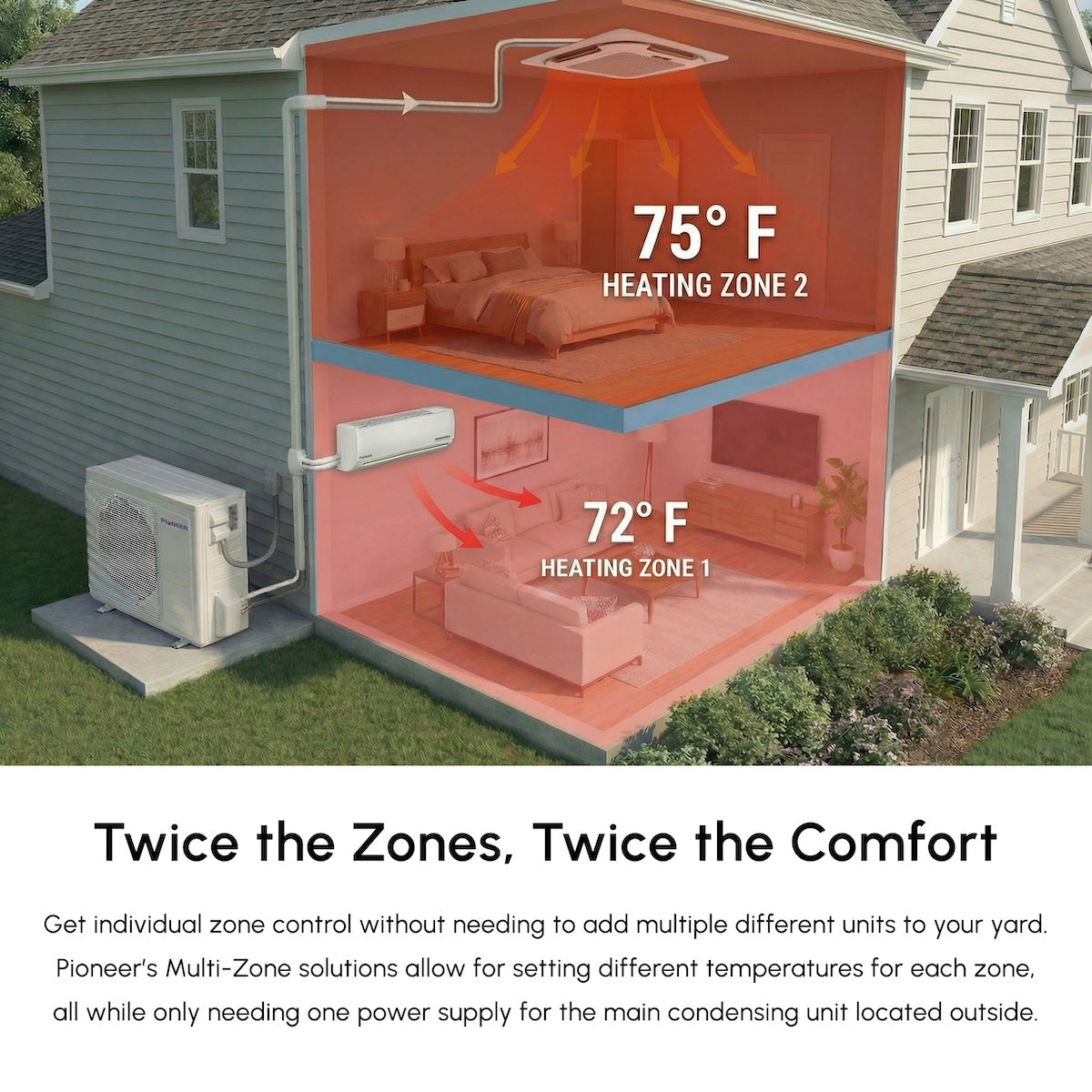


Living in a small home doesn't mean you should have to compromise on comfort. The challenge is finding heating and cooling equipment that fits without getting in the way of everyday life. That's one reason ductless mini splits work in small places, especially when installing traditional ductwork isn't practical.
Make Room for Everyday Living
When you're working with limited space, every square foot counts. Traditional HVAC systems that use ducts need room for air distribution, making installation more complicated in homes without existing ductwork. A ductless mini split eliminates the need for that ductwork by delivering heated or cooled air directly into the room.
You can install a wall-mounted indoor unit high on the wall, leaving more floor space for furniture. You'll still need to leave enough clearance around the unit for proper airflow.
Control Your Immediate Environment
You may notice indoor temperatures changing as outdoor conditions shift, particularly in a small space. A ductless mini split heat pump system provides both heating and cooling by transferring heat between indoor and outdoor environments. That means you can adjust the temperature throughout the year without needing separate heating and cooling appliances.
Many models also use inverter technology, which adjusts compressor speed as demand changes. Instead of running at full output, the compressor can slow down as the room approaches your desired temperature.
Find the Right Installation Spot
Although ductless mini splits work in small places, you'll still need to choose an installation location carefully. You'll need adequate wall clearance and a suitable route for the refrigerant lines connecting the indoor and outdoor units. The outdoor unit also needs enough open space for proper airflow.
As you plan your installation, keep these requirements in mind:
- Keep the indoor unit away from airflow obstructions
- Position the indoor unit where air can circulate throughout the room
- Allow access for routine filter cleaning
- Plan a suitable route for condensate drainage
- Leave the clearance specified by the manufacturer around the outdoor unit
Match Capacity to Your Space
A small room doesn't necessarily need the smallest available unit because heating and cooling requirements depend on more than square footage. For example, a room with substantial sun exposure may need a different capacity than a similarly sized shaded space.
Choosing the right capacity helps maintain comfortable temperatures, while an oversized unit may operate less efficiently if it can't reduce its output enough to match the room's needs. A professional load calculation can help you select appropriately sized equipment.
Consider Long-Term Operating Costs
Focusing only the spaces you're using may help you manage energy consumption, especially when you adjust the temperature during periods when a room is unoccupied. Your actual savings will depend on your equipment and usage patterns. If you're considering DIY installation to reduce upfront costs, check the manufacturer's instructions and local requirements first, as certain electrical and refrigerant work may require a qualified professional.
A comfortable small space depends on equipment that suits your heating and cooling needs. Pioneer Mini Split offers ductless systems for homeowners exploring compact-space solutions. Explore the available systems and compare their capacities with your home's requirements. Your next comfort upgrade could fit into your space without taking it over.


