




Your local climate should play a major role in choosing a heating and cooling system. Equipment that performs well in mild weather may struggle when temperatures become extreme. That's why picking the best HVAC system for your climate requires looking at the conditions your home faces throughout the year. With the right information, you can choose equipment that keeps your home comfortable without wasting energy.
Consider Your Local Temperature Extremes
Focus on your area's hottest and coldest days rather than average temperatures. If you experience long, intense summers, choose equipment that can handle sustained cooling demand. In milder climates, a heat pump may provide reliable heating and cooling year-round.
Cold climates require a closer look because heat pumps can lose heating capacity as outdoor temperatures drop. Some models perform well in freezing conditions, but capabilities vary. Check the manufacturer's temperature limits and heating capacity to determine whether you'll need supplemental heat.
Account for Humidity Levels
High humidity can make your home uncomfortable, even when the temperature seems right. Your air conditioner removes moisture as it cools, but an oversized unit may cool the room too quickly to remove enough humidity.
In humid climates, consider equipment that adjusts its cooling output based on demand. Variable-speed systems can run longer at lower capacities, allowing more time for moisture removal. However, you may still need a separate dehumidifier if indoor humidity remains too high.
Match Equipment to Your Home
Your location tells only part of the story because homes within the same climate can have very different heating and cooling requirements. To pick the right HVAC system for your climate, consider the building's characteristics alongside local weather conditions. A professional load calculation can help you determine the capacity your home needs.
Pay particular attention to these factors when comparing equipment:
- Insulation: Poor insulation increases heating and cooling demand
- Window exposure: Direct sunlight can increase cooling needs
- Air leakage: Drafts make indoor temperatures harder to maintain
- Ceiling height: Taller rooms contain more air to condition
- Room usage: Occupancy patterns influence where you need temperature control
Explore Ductless Heating and Cooling
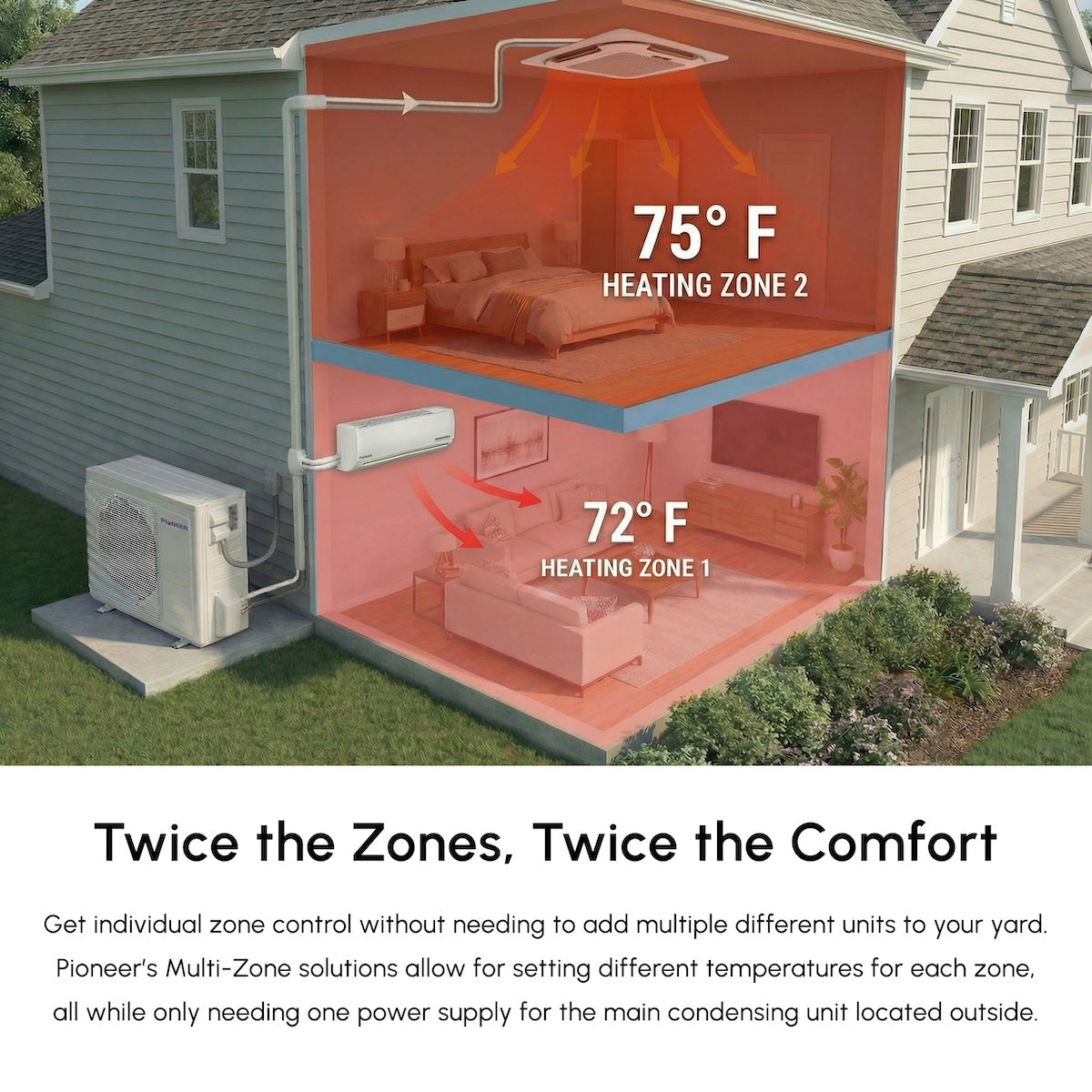
If your home lacks existing ductwork, a ductless mini split could offer a practical alternative to installing a central ducted system. These units condition individual areas without relying on ducts to distribute air. You can also consider a multiple zone mini split when several rooms need independent temperature settings.
Keep in mind that individual room controls don't eliminate the need for proper equipment sizing. A multi-zone setup shares outdoor-unit capacity among connected indoor units, so simultaneous demand deserves attention. Review the equipment's specifications to confirm that it suits your home's requirements.
The best HVAC choice should make sense for the weather you experience, not just the conditions on an average day. Once you've narrowed down your requirements, you can compare equipment with greater confidence. Pioneer Mini Split offers ductless heating and cooling options worth exploring as you evaluate your home's needs. Explore the available systems to find a solution suited to your living space.


