




You want your home to stay comfortable, but you don't necessarily want a wall-mounted air conditioner in every room. Perhaps you'd prefer a heating and cooling setup that works quietly behind the scenes while keeping your living spaces uncluttered. This guide to inverter ducted split systems explains an option that combines concealed indoor equipment with adjustable heating and cooling output. Once you know what goes into these systems, you'll have a better idea of their benefits and what installation involves.
What Makes These Systems Different?
An inverter ducted split system uses an outdoor unit and a concealed indoor air handler to heat or cool your living space. Instead of blowing conditioned air directly into a room, the indoor unit distributes it through ductwork. You typically see only the air vents, making this arrangement appealing when you'd rather keep equipment out of sight.
Unlike a conventional single-speed setup, an inverter system can adjust its compressor output as your home's heating or cooling needs change. You still get the familiar experience of conditioned air coming through vents, but the equipment can respond more gradually to changing temperatures. This flexibility is especially useful when your home doesn't need full heating or cooling capacity throughout the day.
How Inverter Technology Works

Traditional single-speed compressors generally operate at full output until the thermostat signals them to stop. Inverter technology takes a different approach by adjusting compressor speed within the equipment's operating range. Consequently, the unit can continue running at reduced output when your home needs less conditioning.
That doesn't mean the compressor runs continuously under every condition. It may still shut down when demand falls below its minimum operating capacity or when its controls require a pause. However, its ability to vary output can reduce abrupt temperature swings compared with equipment that relies entirely on full-capacity cycling.
Why Variable Output Helps
You might notice the benefits during mild weather when your heating or cooling needs are relatively low. Rather than repeatedly delivering full output, the compressor can slow down to match lighter demand. This may help maintain steadier indoor temperatures while reducing unnecessary energy consumption. Actual savings depend on the equipment's efficiency and your home's conditions.
Know the Main Components
Although most of the equipment stays out of sight, you'll want to know what you're getting before planning an installation. Each component contributes to the way your ducted heat pump system operates. Learning their basic functions also makes equipment specifications easier to interpret.
Here's what you'll typically find in a complete setup:
- Outdoor unit: Houses the compressor and exchanges heat with the outdoor air
- Indoor air handler: Conditions indoor air and moves it into the connected ductwork
- Refrigerant lines: Carry refrigerant between the indoor and outdoor equipment
- Air ducts: Deliver conditioned air to the spaces served by the unit
- Controls: Let you select operating modes and adjust the desired temperature
Choose the Right Capacity
Bigger equipment doesn't automatically deliver better comfort. Your home's heating and cooling requirements depend on its construction and local climate, so square footage alone won't give you a reliable capacity recommendation. An oversized unit may cycle unnecessarily if its minimum output exceeds your home's demand.
An undersized unit presents a different challenge because it may struggle to maintain your preferred temperature during extreme weather. Therefore, a professional load calculation provides a stronger basis for choosing equipment than a simple room-size estimate. You'll also want to consider the system's available heating capacity at your area's colder outdoor temperatures.
Plan the Ductwork Carefully
Your ductwork needs to deliver the required airflow without creating excessive resistance. Long runs and restrictive bends increase the pressure the indoor fan must overcome, potentially reducing the air reaching your rooms. As a result, a compact ducted system isn't necessarily suitable for an existing network of large or complicated ducts.
You'll get better results by planning duct routes around the indoor unit's airflow capabilities rather than assuming any available ductwork will work. Properly sized supply ducts help deliver conditioned air, while a suitable return path allows indoor air to circulate back through the equipment. Additionally, sealing accessible duct joints helps prevent conditioned air from escaping into spaces you don't intend to heat or cool.
Check Airflow Requirements

This guide to inverter ducted split systems wouldn't be complete without discussing static pressure. In simple terms, static pressure describes the resistance your air handler encounters as it pushes air through the duct network. Every ducted unit has operating limits, so you'll need to check the manufacturer's specifications rather than assume the fan can handle any layout.
Some concealed ducted units support relatively short duct runs, while others accommodate more demanding distribution arrangements. You'll need to select equipment that can provide the required airflow against the resistance of your planned ductwork. Otherwise, poor airflow may undermine comfort despite having a correctly sized compressor.
Understand the Installation Process
If you enjoy tackling home improvement projects, you may want to participate in the installation planning. However, concealed ducted equipment introduces requirements that differ from mounting a typical wall unit. You need to account for available space and follow the manufacturer's instructions for the specific model.
Several installation considerations deserve your attention:
- Mounting clearance: Allow sufficient space for the air handler and future servicing
- Condensate drainage: Provide a suitable route for moisture collected during cooling
- Electrical connections: Follow applicable codes and requirements for qualified electrical work
- Refrigerant connections: Use qualified personnel where required for refrigerant handling and commissioning
- Equipment compatibility: Confirm that your selected indoor and outdoor units work together
Make the Most of Controls
Once you have the equipment installed, its controls influence daily comfort. You can select a reasonable temperature and allow the inverter to adjust output as conditions change. Repeatedly making large thermostat changes generally isn't necessary to maintain a comfortable room.
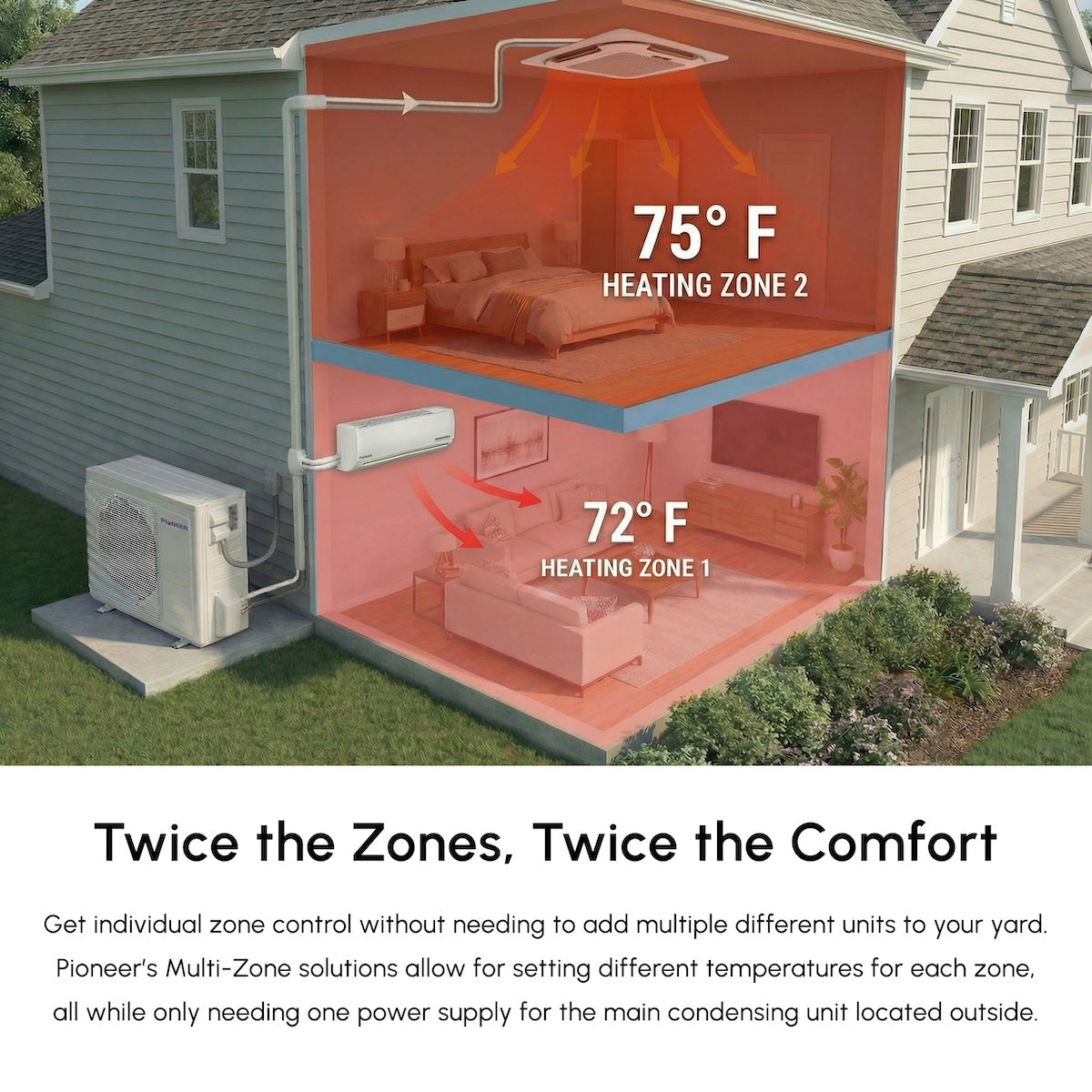
You'll also want to understand the difference between controlling a ducted area and independently controlling individual rooms. A single ducted indoor unit generally serves one temperature-controlled zone, even when its ducts reach several rooms. If you need separate room temperatures, you'll need to evaluate compatible zoning arrangements or additional indoor units.
Choosing a concealed heating and cooling setup gives you an opportunity to create a cleaner interior without giving up ducted air distribution. However, getting the right results requires careful equipment selection and a duct layout suited to your home. Pioneer Mini Split offers HVAC options worth exploring as you compare possible configurations. Take a closer look at your home's requirements, review the available equipment, and make your next comfort upgrade a well-informed one.


